
Art blog 12 May 2018
Art forgeries as a gain
Art & Crime
Author: Ernest Hemingway
We all know that many things go wrong in this world, and we experience it day after day. But that there is a world in which false things are produced virtuosically, yet with ill intent and a great deal of criminal energy, is something we are not always aware of. Well, a visit to the Fälschermuseum in Vienna's 3rd district opens our eyes in this respect and leaves us partly amused, partly dismayed.
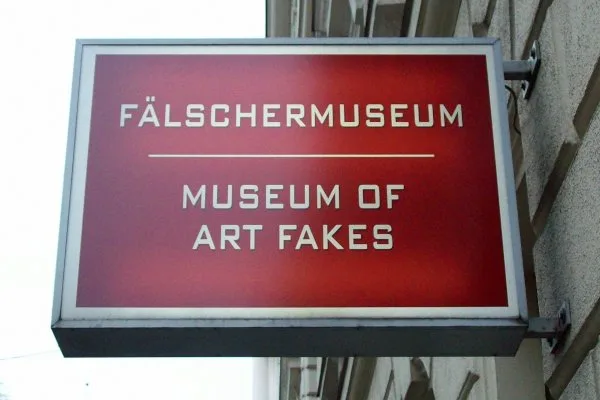
Don't be so sure
Names such as Lothar Malskat, Elmyr de Hory, Tom Keating, Edgar Mrugalla or David Stein mean nothing at all to most people, but once their activities became known they brought many a bead of anxious sweat to the brow of more than one art collector. Mrugalla, for example, stated on record after his exposure in 1987 that he had forged c. 2,500 paintings and prints with a total value of around 20 million euros and smuggled them into the art market. And some of them can certainly still be viewed and marvelled at in major museums today as “fascinating originals from the hand of great masters”.
“The world wants to be deceived, so I deceive it” was the motto of the British art forger Eric Hebborn. One of his masterpieces in putting this plan into practice was undoubtedly a Leonardo drawing that hung for a long time in the National Gallery in London. However, although his brilliant “craftsmanship” brought him a great deal of money in the short term, it brought him no luck in the long term: at the age of 62 his skull was smashed in – by a duped art collector?
The life of the Hungarian painter Elmyr de Hory ended just as tragically. He began his career as a forger in 1946, when he sold a “home-made” Picasso. He acquired a taste for this kind of business and promptly produced a whole series of small, fine and rather expensive Picassos, all of which sold splendidly. When this specialisation became too one-sided and began to arouse suspicion, he broadened his palette and now brought “genuine works” by Renoir, Modigliani and Matisse onto the market. Later, a number of other renowned masters were added. In the end, his love for and collaboration with Fernand Legros, a young Frenchman, proved his undoing. A quarrel over money exposed their joint forging activities, and Eric Hebborn faced a long prison sentence, which he escaped by taking an overdose of sleeping pills.
These and numerous other gripping and instructive stories are told to us here from the walls.
Unfortunately, the Viennese Fälschermuseum has no documentation of one of the most recent major cases, that of master forger Wolfgang Beltracchi, because acquiring a corresponding exhibit is too expensive, as the director Diane Grobe told us, but one thing is certain nonetheless: it is not false to claim that a visit to this small specialist museum is a genuine gain.